“Interpretive thinking” is a unique approach to planning. It’s a new way of looking at your site, your resources, and your visitors. It clarifies your stories. This thought process leads to identifying significance, distinctive competence, and your essential experiences, and combines those with your compelling stories to create a site-specific, meaningful plan. With those identified, your most important experiences and messages can be explored and the visitor experience defined. Combined with budgets, staffing, and other management factors, we then develop a set of appropriate interpretive media. The entire process takes place in multiple phases, with the interpretive thinking process in the first phase. This includes discussion of audiences, mission, and resources combined with the philosophy and skill of interpretation, and concluding with defining the site’s essential experiences. Subsequent phases are devoted to development of interpretive media based on the phase I plan.
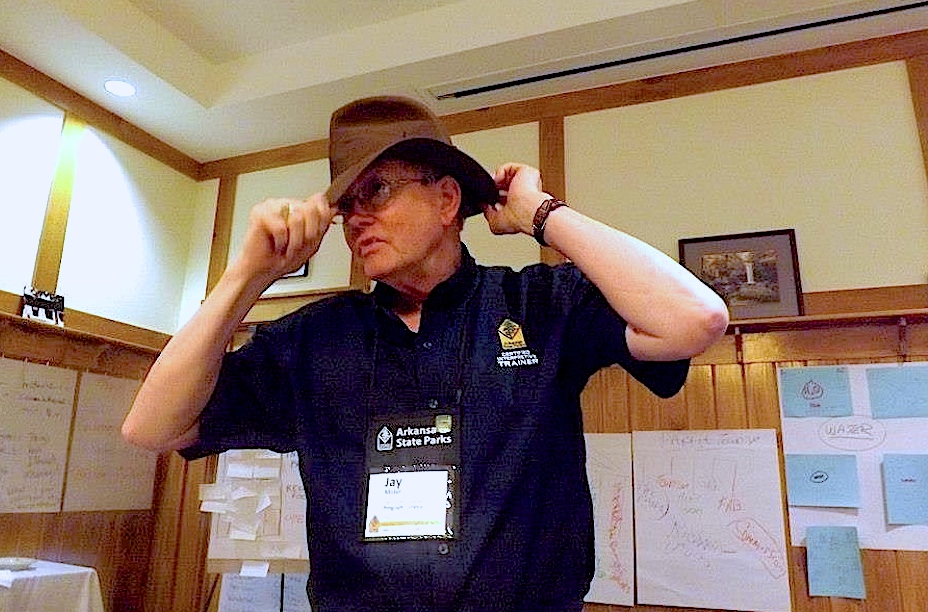
The planning process often produces a new vision, a new way both visitors and staff see the site. The plan becomes a framework for the visitor experience, beginning with website and arrival, to wayfinding, essential experience sites and media, programs, tours, publications, exhibits, and interpretive resale. All this is aimed at creating a memorable experience that builds appreciation for the site, and fosters repeat visitation and stewardship.
Comments have included: – This is the best training our site has ever had. – I’ve never thought of my site the way. – Now I know just what to say to visitors who ask what they can do at my park.
Below are four cover pages from my planning portfolio, click on any cover to enlarge it.
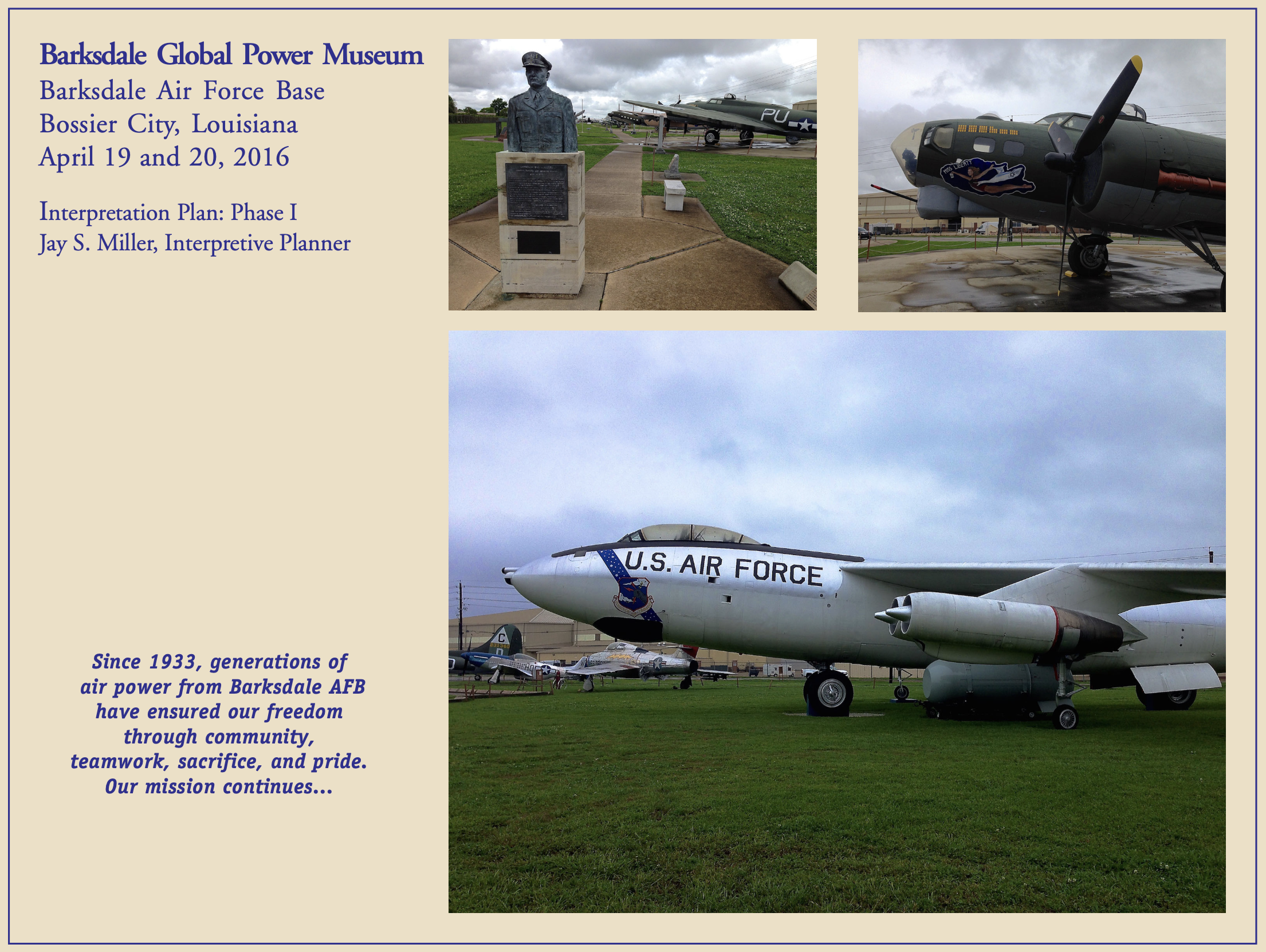
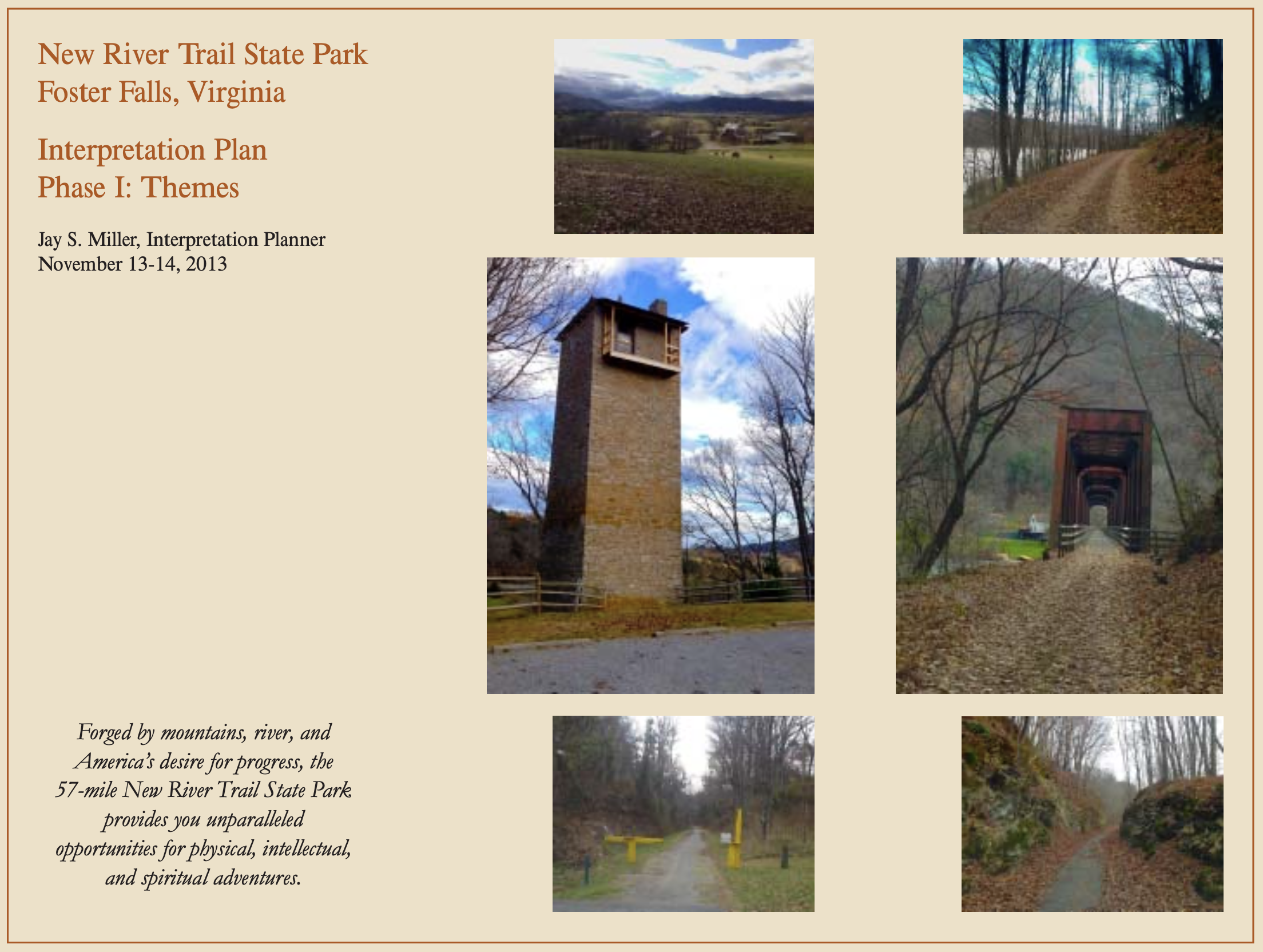
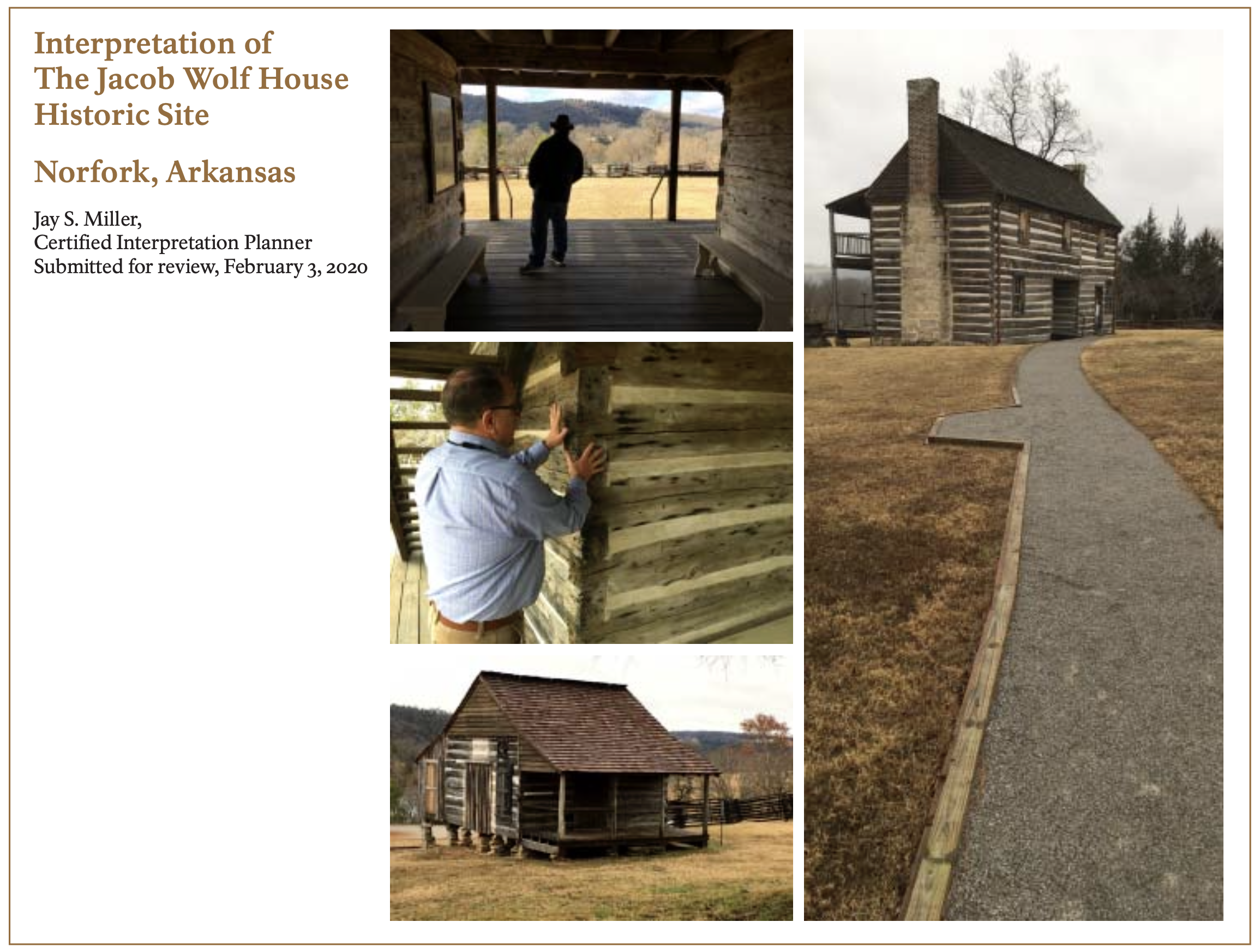
Interpretation planning has included historic sites, zoos, and parks across the mid-south. The interpretive thinking process works best when participants include regional managers and staff from all park positions, and can include stakeholders from friends groups and the community.
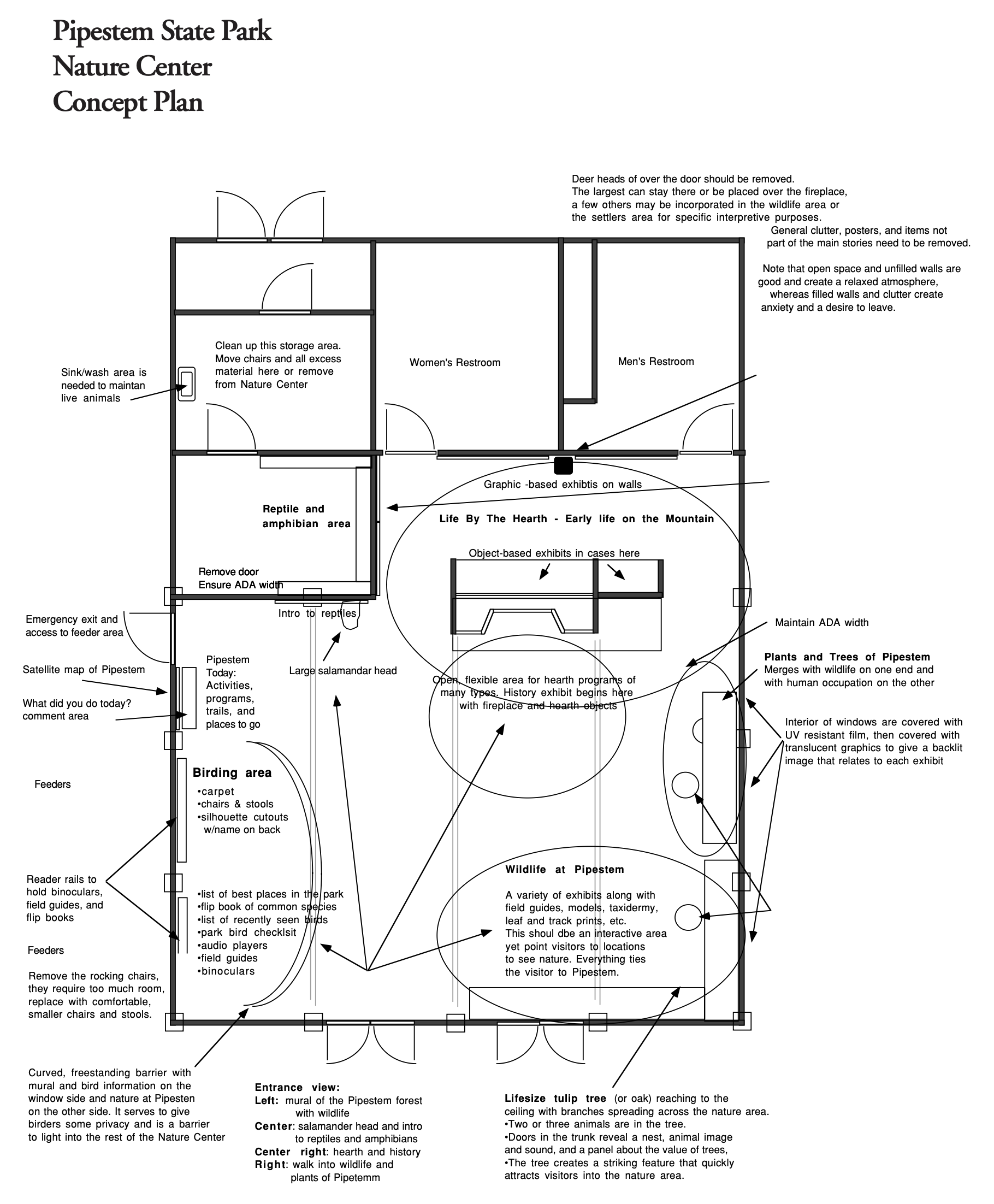
Each plan is tailored to the character of the site and wishes of the staff. Some include proposed exhibit floor plans. Below is a concept plan for updating exhibits in the existing nature center at Pipestem Resort State Park in West Virginia. This concept incorporates the existing fireplace and rooms/walls to maintain staff areas and restrooms while creating engaging exhibits. When entering the nature center visitors have four visual “attractions” and make their own decision as to which direction to take. There is open space in the center for movement and sit-on-the-floor programming, plus unique features (life size tree, oversized salamander head, floor to ceiling mural, and the hearth) that attract attention and create memorable exhibit spaces. All passageways meet ADA requirements.
Training
As a keynote speaker and workshop trainer, stories from my experience become motivation through real-world examples of success. I challenge audiences to:
- tell the difficult stories
- go beyond historic structures and “people the place”
- grasp that “the main thing is to keep the main thing the main thing”
- understand how “BIG themes can change your life!”
I create training presentations and workshops to meet your needs, resources, and mission, including interpretation planning, and training for educators, docents, interpreters and managers. Half-day and multiple-day workshops can focus on skills for frontline interpreters, staff and volunteers who meet and greet the public, or for those planning or managing interpretation. My training leads to connections, memory and action. I am also a National Association for Interpretation Certified Interpretive Trainer. The 32-hour Certified Interpretive Guide (CIG) workshop and the 2-day Certified Interpretive Host (CIH) course teach philosophy and technique as they build confidence and pride.
Exhibits
Interpretive writing and design is a unique art that I have studied for over 30 years. My process begins with interpretive theme development which provides direction and focus to the project. I enjoy working with staff to think through audience needs and staff desires to determine how to best connect with your visitor. I have extensive experience designing wayside exhibits using a variety of materials.
 Interpretive Communications